
The origin of La Folía Festival dates back to the commemoration of Our Lady of La Barquera’s arrival in San Vicente, a tradition linked to the history of the Lady, although the exact date is unknown.
According to the now popularised legend of La Folía, as narrated in the past by Father Antonio Iglesias (1876-1959) with joy, honour and pride:
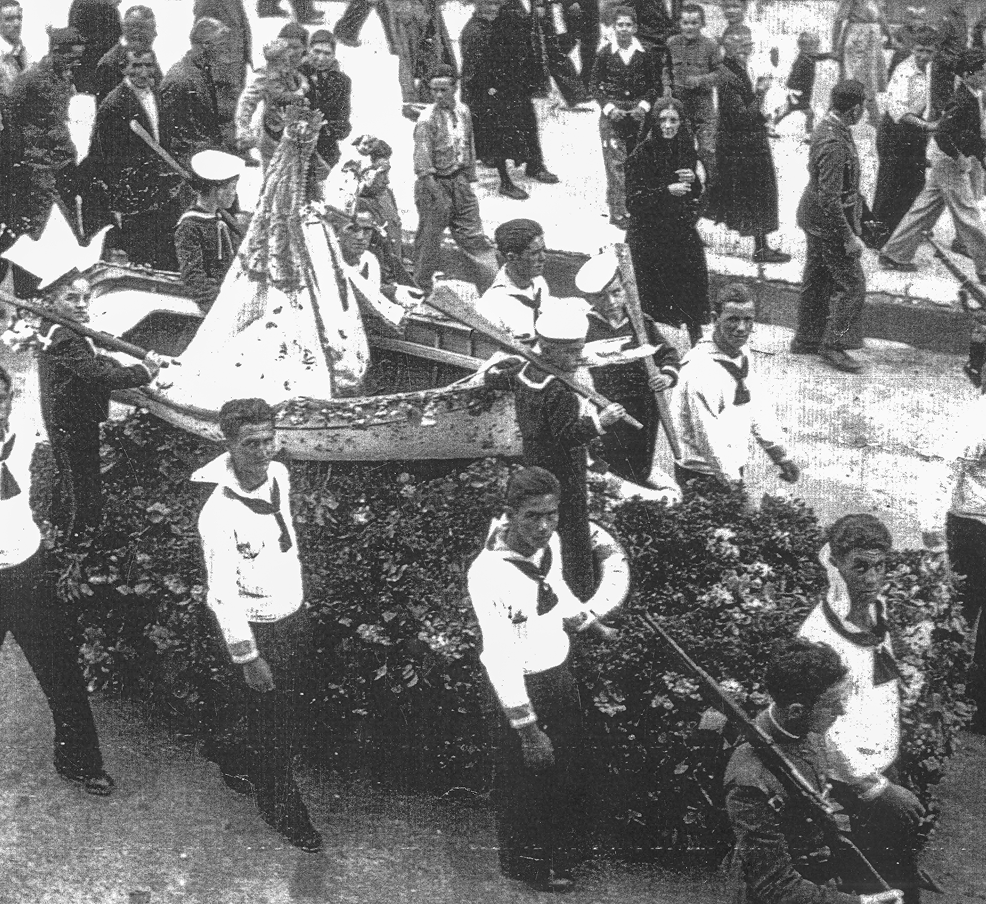
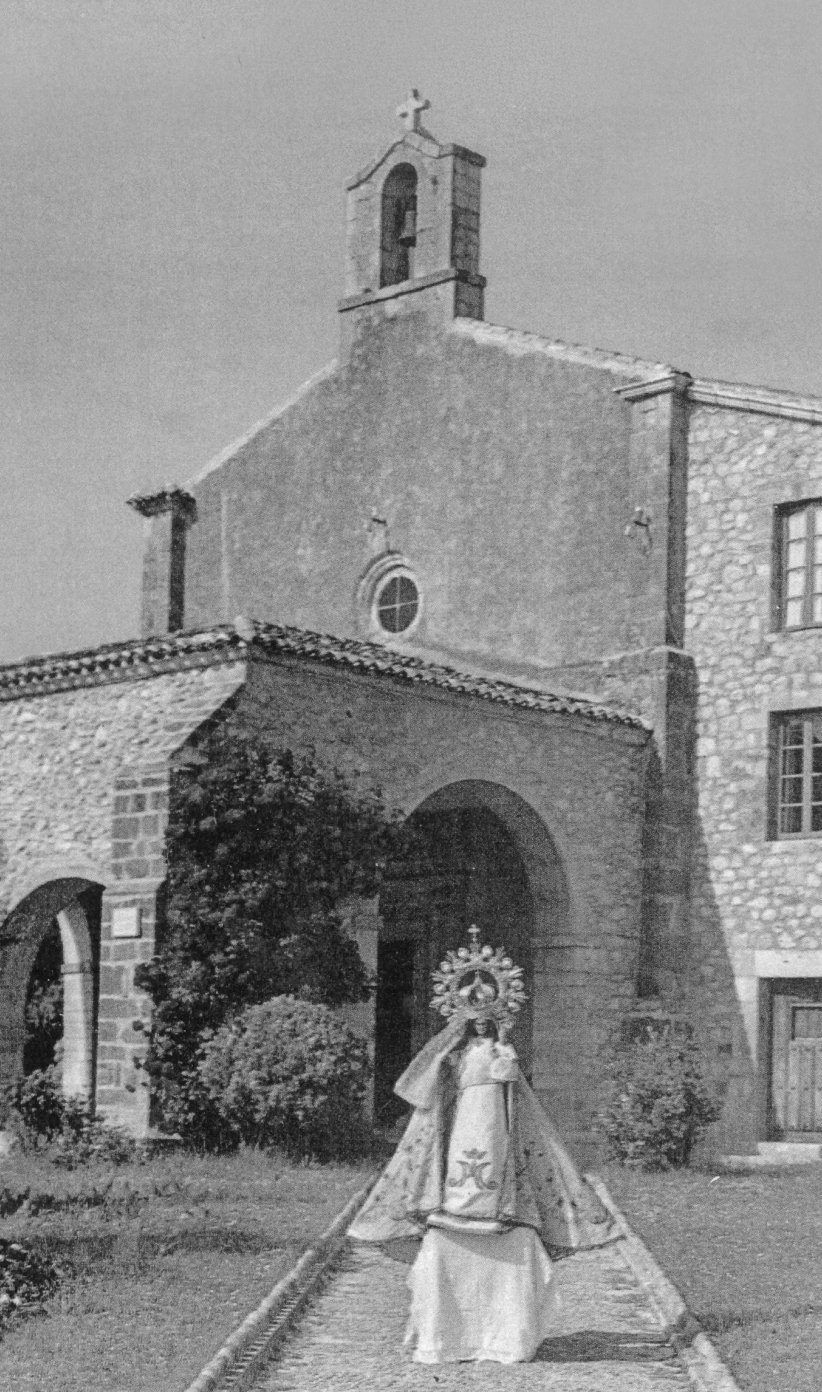
In the dark days of the Saracen invasion and domination of our Spain, the Muslims tried to banish the Christian religion.
In these sad circumstances, on a fortunate day, which many claim was Easter Tuesday, the residents of San Vicente saw a mysterious boat heading towards the estuary, apparently without a pilot, without a rudder, without a crew, without oars or sails, enveloped in a bright light, guided by a miraculous image, which was heading towards San Vicente.
From the most beautiful firmament the sun shone like a golden ember; the unalterable and calm sea, sweetly curled by a gentle breaking of waves; this was the simple and at the same time grandiose setting that Our Lady, Queen of Heaven and Earth, chose to make her entry into San Vicente, crossing the sandbank, to establish her throne of grace in the fishing village.
As soon as the parishioners, happy inhabitants of San Vicente, saw the boat – dazzling with clarity and beauty – they were astonished and perplexed by this unexpected apparition, not knowing what Heaven meant by that wonder and, seeing that it stopped at the entrance to the port, they went to share the news of this admirable event to the Town’s priests, who, by divine inspiration, hastily gathered the people in the parish church and, in solemn procession, went to the place where the portentous boat, rocking on the calm waters, awaited its arrival on the shore.
The people were filled with emotion when they contemplated the mysterious ship and, being overcome by amazement and deep respect, they all knelt on the ground to reverently receive the singular favour that Heaven bestowed on them.
The venerable priests, representatives of the people, took the miraculous image in their anointed hands, and amidst the clergy’s liturgical chants, the enthusiastic acclamations of the people, the sighs, the sobbing, the tears and the beating of everyone’s hearts, which formed an indescribable hymn of love and gratitude, they took to the parish church, the chapel of San Vincente, the miraculous effigy, which had chosen as a place of special worship and throne of favours and graces the simple, hospitable and pious town of San Vicente.
In accordance with the official documents, records or inventories that we can consult in order to establish its context, it seems reasonable to think that, if the image of Our Lady was taken in a procession from its Sanctuary on Holy Saturday to the town, in order to encounter her Risen Son on Easter Sunday, it would return in procession on “Easter Tuesday,” in celebration of La Folía.
The historian Valentín Sainz states that the festival of La Folía was held as early as 1753, based on the existence of an inventory of goods belonging to Our Lady of La Barquera that mentions some “curtains” FOR WHEN SHE GOES OUT or FOR WHEN SHE IS ON HER WAY.
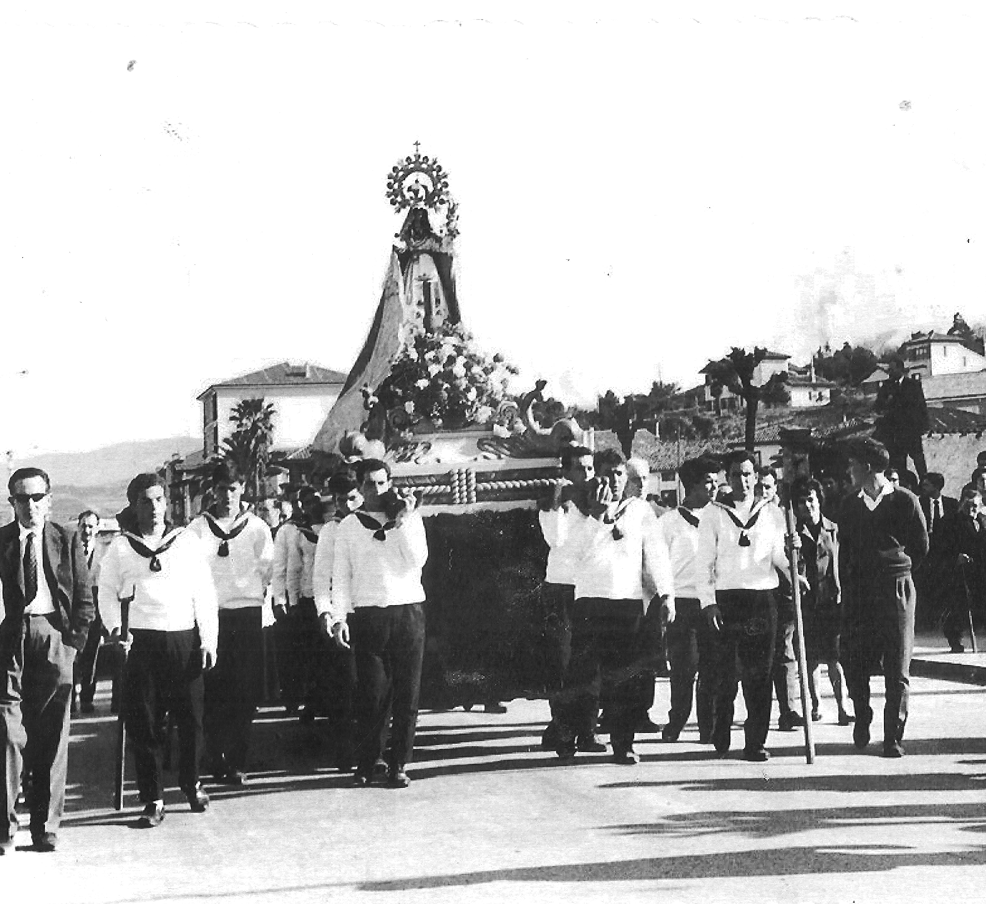
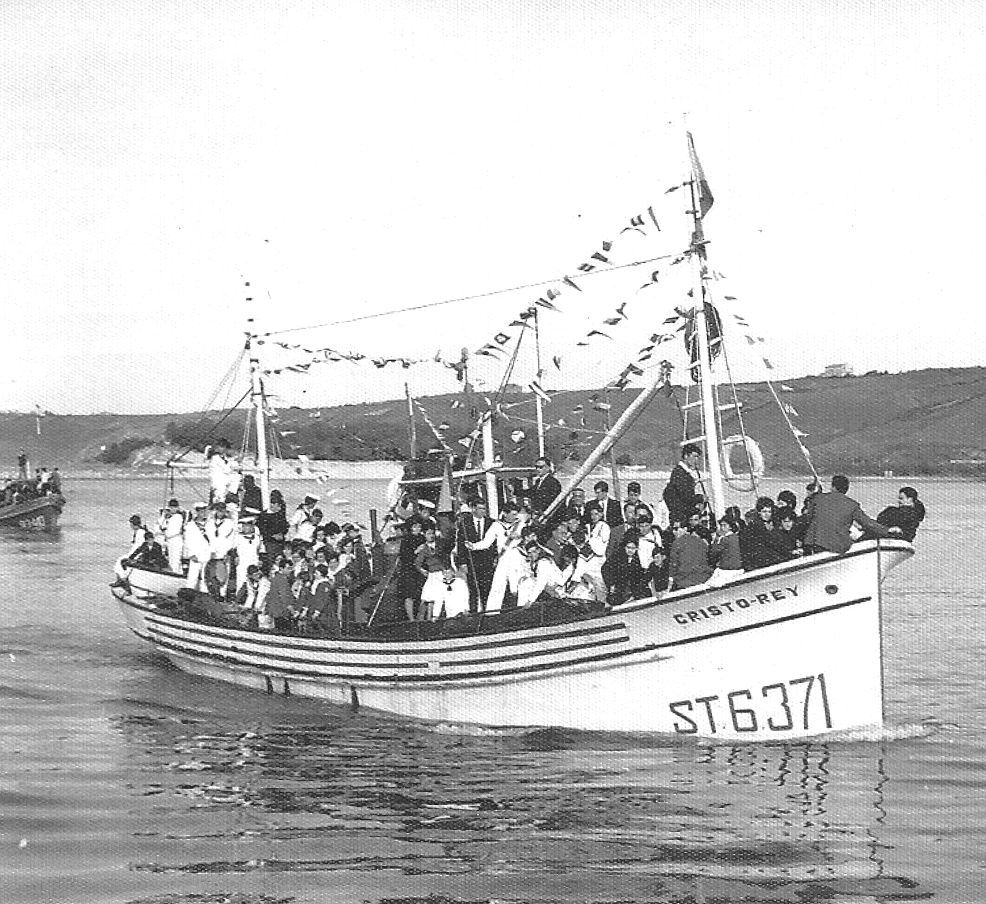
Those curtains would have been used to hide the statue, clearly evoking Holy Saturday, the only day on which La Barquera left her chapel by land and returned to it by sea amidst the acclamations of all her children on Easter Tuesday, our Folía, which always symbolized the anniversary of Our Lady’s apparition.
This tradition would evolve over the centuries until it became the emotional and multitudinous celebration that we know today as La Folía, held on the second Sunday after Easter. It has become one of the most important maritime pilgrimages in northern Spain.